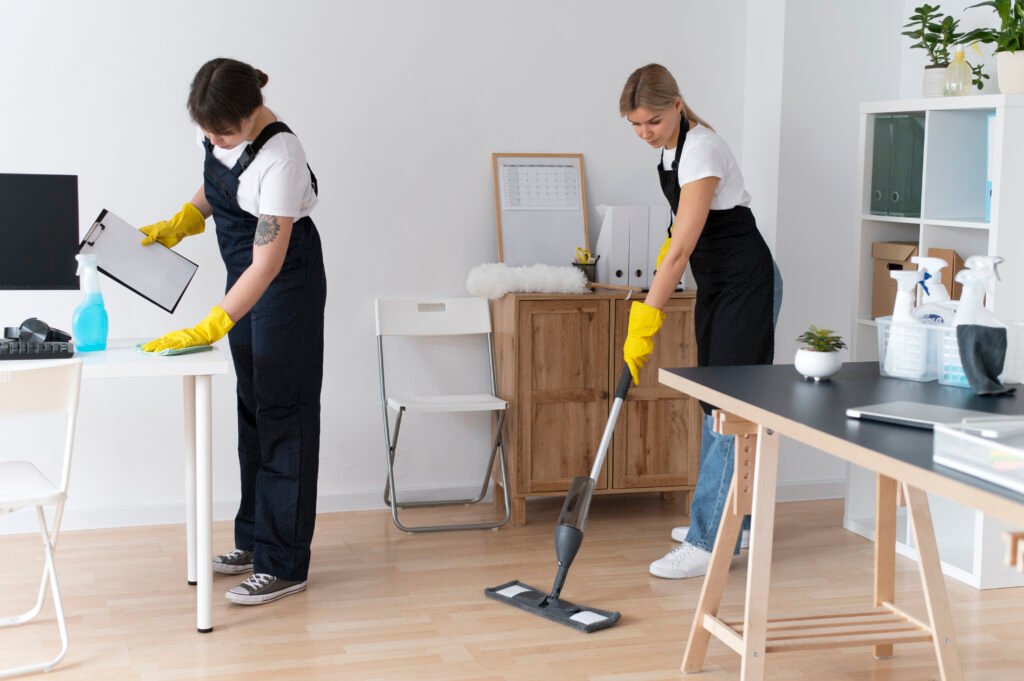
Most people think they keep a clean house. And honestly, for day-to-day standards, they probably do. But there’s a big difference between a home that looks clean and one that actually is. The oven you haven’t touched since winter. The grout in the shower that used to be white. The dust sitting thick on top of the wardrobe that nobody ever thinks to check. That stuff doesn’t go away on its own.
A deep clean is basically a full reset for your home. Not a quick wipe-down before guests arrive, but an actual room-by-room, surface-to-surface, inside-the-appliances kind of clean. In Australia, it’s also called a one-off clean, spring clean, or intensive clean depending on who you ask.
This guide breaks down everything – what’s actually included, what it costs around Australia in 2026, how long it takes, and whether it’s worth doing yourself or just paying someone to handle it.
1. What Deep Cleaning Actually Means
The simplest way to explain it: a regular clean maintains, a deep clean restores.
When you do a standard clean, you’re wiping what’s visible. Benches, toilets, floors, maybe the bathroom mirror. That’s fine for keeping things presentable week to week. But it doesn’t touch the grease built up in the rangehood filter, the mould growing around your shower seals, or the dust packed into the blades of your ceiling fan.
A deep clean works through every room in a structured way, including all the areas that get skipped in a regular routine. Inside the oven. Inside the microwave. Behind the fridge. The tops of door frames. Window tracks. Skirting boards. The inside of your kitchen cupboards. None of this is exciting work, but all of it matters.
| Note In Australia, deep cleaning and end-of-lease cleaning are sometimes used interchangeably, but they’re not the same thing. A bond clean follows a very specific checklist tied to your property manager’s exit requirements. A deep clean is more flexible, and focused on getting the space genuinely clean rather than ticking off a tenancy agreement. |
2. Deep Cleaning vs Regular Cleaning
People ask this constantly, so here’s a clear breakdown. The difference isn’t just about effort, it’s about what actually gets done.
| Task | Regular Clean | Deep Clean |
| Wipe kitchen benchtops | Yes | Yes, plus edges and splashback |
| Inside the oven | No | Yes |
| Stovetop burners and drip trays | Surface wipe only | Yes, fully cleaned |
| Inside the fridge | No | Yes |
| Inside cupboards and drawers | No | Yes |
| Bathroom grout scrubbing | No | Yes |
| Behind the toilet | Rarely | Yes |
| Vacuum under and behind furniture | No | Yes |
| Skirting boards | No | Yes |
| Ceiling fans and light fittings | No | Yes |
| Window tracks and sills | No | Yes |
| Inside microwave and dishwasher | No | Yes |
| How often | Weekly or fortnightly | Every 3 to 6 months |
One way to think about it: regular cleaning is maintenance. Deep cleaning is repair. You need both, but they serve very different purposes.
3. What’s Actually Included, Room by Room
This is where most guides get vague. So here’s what a thorough professional deep clean actually covers in each room.
Kitchen
The kitchen takes the longest. Grease builds up in places you’d rather not think about, and a proper clean here goes well beyond wiping the bench.
- Oven interior – racks, walls, door glass, and floor of the oven
- Rangehood filter – degreased, not just wiped
- Stovetop burners, elements, and drip trays
- Inside the microwave including the ceiling and turntable
- Inside the dishwasher – filter, spray arms, door seals
- Benchtops, edges, and tile splashback
- All cupboards and drawers, inside and out
- Sink, tapware, and the area around the drain
- Window sills and tracks
- Floor mopped including under the fridge and other appliances
Bathrooms
Bathrooms hide a lot. Soap scum and limescale build up slowly enough that you stop noticing them, until one day you do. A proper bathroom deep clean gets into all of it.
- Toilet – bowl, under the rim, cistern, lid, base, and the floor behind it
- Shower screen tracks and runners, not just the glass
- Shower head descaled
- Bathtub and any spa jets
- Tile grout scrubbed, not just wiped
- Exhaust fan cover removed and cleaned
- Vanity – inside and out, including the drain area
- All tapware descaled and polished
- Mirrors cleaned streak-free
- Floor mopped right to the edges
Bedrooms
Bedrooms tend to get skipped in a regular clean beyond the floor and maybe the surfaces. But dust builds up fast in here, especially on and above furniture.
- Ceiling fan blades wiped
- Light fittings and shades dusted
- All furniture surfaces wiped down
- Inside wardrobes and the tops of them
- Skirting boards
- Mattress vacuumed and flipped if possible
- Under and behind the bed vacuumed
- Carpet edges and any stains spot-treated
- Window sills and tracks
Living Areas and Dining
Living areas accumulate dust in ways that are easy to ignore because the room still looks fine on the surface. Under the couch, behind the TV unit, inside the shelving – it all adds up.
- All furniture surfaces wiped
- Under and behind all furniture vacuumed
- Couches vacuumed including under the cushions
- TV and entertainment unit cleaned
- All shelving and decorative items dusted
- Cornices and light fittings dusted
- Light switches and powerpoints wiped
- Window frames, sills, and tracks
- Sliding door tracks
- Floors vacuumed and mopped
Laundry and Hallways
Often the most forgotten areas in the whole house.
- Inside the washing machine drum and door seal
- Exterior of washer and dryer
- Laundry tub and tapware
- Storage shelving wiped down
- Skirting boards throughout hallways
- Door frames and architraves
- Light fittings
- Floors
4. A Real Deep Cleaning Checklist You Can Actually Use
Whether you’re doing it yourself or supervising a professional team, this is how to approach it properly.
| Tip: Start at the top of each room and work down. Dust falls. If you mop first and then wipe the shelves, you’re mopping twice. Clean wet areas before dry ones to avoid spreading bathroom bacteria into bedrooms. |
- Get your supplies sorted before you start. All-purpose spray, bathroom disinfectant, a proper degreaser for the kitchen, glass cleaner, grout brush, microfibre cloths, mop and bucket. Missing one thing halfway through a deep clean is genuinely annoying.
- Clear the clutter first. You cannot deep clean around stuff sitting on every surface. Move it, put it away, or put it in a pile to deal with later. Just get it out of the way.
- Pre-treat the hard areas. Put oven cleaner in the oven, spray the shower grout with a penetrating cleaner, and let the toilet bowl soak. Let these sit for at least 20 minutes while you work elsewhere. It saves a lot of scrubbing.
- Work room by room from top to bottom. Do not jump between rooms. Finish one completely before moving to the next. It sounds obvious but it’s easy to lose track and end up half-cleaning six rooms.
- Floors are always last. Vacuum all carpets, including the edges and under furniture. Then mop hard floors. Wipe the skirting boards as you go through each room.
5. How Much Does Deep Cleaning Cost in Australia? (2026)
Prices vary quite a bit depending on where you live, the size of the place, and how long it’s been since the last proper clean. Here’s a realistic guide for 2026.
| Home Size | Price Range (AUD) | Approx. Duration (2 cleaners) |
| Studio or 1 bedroom | $180 – $280 | 3 to 5 hours |
| 2 bedrooms | $250 – $380 | 4 to 6 hours |
| 3 bedrooms | $320 – $500 | 5 to 8 hours |
| 4 bedrooms | $420 – $680 | 7 to 10 hours |
| 5+ bedrooms | $550 – $900+ | Get a quote |
| Location note Sydney and Melbourne CBD bookings tend to sit at the higher end, with hourly rates around $45 to $65 per cleaner. Regional areas are usually 10 to 20% cheaper. The condition of the property matters just as much as the size – a 3-bedroom home that hasn’t been properly cleaned in two years will take longer than one that gets a regular clean fortnightly. |
Most companies charge by the hour or give a fixed quote based on the number of rooms. Fixed quotes are generally better – they give you certainty on cost and the cleaners have an incentive to work efficiently.
Add-ons and what they typically cost
| Extra Service | Approximate Cost |
| Oven deep clean (heavily soiled) | $80 – $150 |
| Inside fridge | $40 – $80 |
| Carpet steam cleaning (per room) | $35 – $65 |
| Exterior window cleaning (per level) | $80 – $150 |
| Garage clean | $120 – $250 |
| Post-renovation clean | 30 to 50% above standard rate |
Post-reno cleans cost more because they take longer. Construction dust gets into everything – vents, inside cupboards, on top of door frames, into light fittings. Expect to pay a premium and don’t be surprised if it takes most of a day.
6. How Long Does It Actually Take?
Longer than people expect. This is probably the most common miscalculation. A 3-bedroom house takes a full day for two experienced cleaners doing it properly. If someone quotes you 2 hours for the same job, they’re either very fast or not doing it thoroughly.
| Home Size | Good Condition | Average Condition | Neglected / Long Overdue |
| 1 bedroom | 3 to 4 hrs | 4 to 5 hrs | 5 to 7 hrs |
| 2 bedrooms | 4 to 5 hrs | 5 to 7 hrs | 7 to 9 hrs |
| 3 bedrooms | 5 to 7 hrs | 7 to 9 hrs | 8 to 12 hrs |
| 4 bedrooms | 6 to 8 hrs | 8 to 11 hrs | 10 to 14 hrs |
These times assume two cleaners working together. A solo cleaner will take roughly 1.5 to 2 times as long. If you’re quoting a cleaner on hourly rates and they’re coming alone, factor that into the total cost.
7. Why It’s Worth Doing
Most people already know their house needs a deep clean. The harder question is whether the effort or the cost is justified. Here’s the honest case for it.
Air quality genuinely improves
Dust mites, mould spores, pet dander, and general particulate matter build up in carpets, cushions, and ceiling corners. If anyone in your household has asthma or bad allergies, this isn’t a cosmetic issue. A proper deep clean makes a measurable difference to what’s floating around in the air you’re breathing every day.
Mould doesn’t go away on its own
Bathroom mould is the obvious one but it also grows in washing machine door seals, under kitchen sinks, and around window frames in poorly ventilated rooms. Wiping the surface does almost nothing. You need a proper disinfectant treatment to actually deal with it. Leave it long enough and you’re looking at structural issues and health problems.
It reduces stress, genuinely
There’s real research behind this. Stanford published a study linking higher cortisol levels to high-density cluttered environments. A clean home doesn’t just look better, it actively reduces the background anxiety of living in a space that feels out of control. Most people notice it immediately after a deep clean – it’s a different feeling.
Appliances and surfaces last longer
Grease buildup inside an oven eventually becomes a fire risk. Limescale destroys tapware over time. Neglected grout cracks and requires expensive retiling. Regular deep cleaning isn’t just hygiene, it’s property maintenance. The $400 you spend on a deep clean now is almost certainly cheaper than the repairs you avoid later.
Helps with selling or leasing
Real estate agents will tell you a clean home sells faster and for more. It’s not just about presentation – a property that’s clearly been looked after signals to buyers that the big stuff has probably been maintained too. Even a modest deep clean before listing makes a visible difference in inspection photos and walkthroughs.
8. How Often Do You Actually Need One?
The honest answer is: it depends on how you live.
Every 3 months makes sense for households with pets, young kids, or anyone with allergies. Also relevant for rental properties being prepared between tenants, and for anyone who entertains a lot or runs a home business.
Every 6 months is plenty for a smaller household that keeps on top of regular cleaning. A couple in a 2-bedroom apartment who clean weekly don’t need a quarterly deep clean.
One-off deep cleans are usually booked after a renovation, before or after moving, after a long illness, or at the start of spring. Spring is actually the most popular time in Australia, and booking gets tight from September onwards.
| Tip: Book spring deep cleaning at least 3 weeks in advance. The September to November window fills up fast, especially in Sydney and Melbourne. If you miss it, aim for late January before the back-to-school chaos kicks in. |
9. DIY vs Hiring Someone
There’s no wrong answer here, but there are trade-offs worth being clear about.
| Do It Yourself | Hire a Professional | |
| Cost | $50 to $150 in supplies | $180 to $680+ depending on size |
| Time | Full weekend for most homes | Half a day, you can leave |
| Results | Depends on your effort and experience | Consistent, trained process |
| Equipment | Consumer products | Commercial-grade gear and chemicals |
| Insurance | None | Public liability (ask to confirm) |
| Best for | Smaller spaces, tight budget | Families, busy schedules, larger homes |
Honestly, DIY deep cleaning is achievable. It’s just time-consuming in a way people don’t anticipate. A 3-bedroom house done properly will take most of a weekend if you’re working alone. That’s a real commitment.
The case for hiring a professional comes down to two things: time and expertise. Trained cleaners work systematically and quickly in ways most homeowners don’t. They also bring commercial degreasers, descalers, and equipment that genuinely work better than what’s available at Bunnings.
A good middle ground is to hire professionals for the big seasonal clean and keep on top of regular maintenance yourself. That way you’re not starting from scratch every 6 months.
What to look for when hiring in Australia
Public liability insurance. Non-negotiable. Accidents happen – a cleaner drops something, a surface gets scratched. Confirm they’re insured before anyone comes near your home.
Police-checked staff. Anyone entering your home should be background-checked. It’s standard for reputable companies and easy to verify.
A written quote with a breakdown. Not just a per-hour rate. You want to know exactly what’s included and what costs extra. Vague quotes lead to disputes.
A satisfaction guarantee. A company confident in their work will offer to come back and fix anything you’re not happy with within 24 to 48 hours. If they don’t offer this, that tells you something.
Real reviews on Google. Look at the 3 and 4 star reviews, not just the 5 star ones. They tend to be more honest. Any company with hundreds of identical-sounding reviews should raise an eyebrow.
10. Questions People Actually Ask
Is a deep clean really necessary or is it a sales pitch?
It’s necessary. The question is just how often. A home that gets regular professional cleans every two weeks probably needs a deep clean once a year. A rental that’s just had tenants move out after 18 months almost certainly needs one before the next occupant. Use your judgment, but don’t write it off as upselling – the work involved is genuinely different to a standard clean.
What’s the difference between deep cleaning and a regular clean?
A regular clean keeps a tidy house tidy. A deep clean gets into what a regular clean doesn’t touch – the inside of appliances, grout, skirting boards, behind furniture, window tracks, ceiling fans, and inside cupboards. It takes at least twice as long and costs more for that reason.
For Brief Explanation here is the Comparison: Deep Cleaning vs Regular Cleaning
How much does a deep clean cost in Australia?
Roughly $180 to $280 for a one-bedder, $320 to $500 for a 3-bedroom home, and $420 to $680 for 4 bedrooms. Sydney and Melbourne are at the top of these ranges. The condition of the property makes as much difference as the size – a neglected home costs more.
How long does it take?
Two experienced cleaners working together will typically need 5 to 8 hours for a 3-bedroom home in average condition. Smaller places can be done in 3 to 4 hours. A heavily neglected property of any size will take longer – sometimes significantly.
Is it the same as a bond clean?
No. A bond clean follows a prescribed checklist that aligns with your property manager’s exit condition report. It’s designed to satisfy a tenancy agreement, not necessarily to get a property genuinely clean. A deep clean is more flexible and more thorough in some ways, but it won’t automatically meet the requirements of a real estate agency checklist.
Can I do it myself?
Yes, if you’re willing to set aside a full weekend for a family-sized home. The checklist is in section 4. The main limitations of DIY are time, and the fact that commercial cleaning products and equipment outperform what most households have. For a smaller apartment, doing it yourself is completely reasonable.
Does it include carpet steam cleaning?
Usually not by default. Standard deep cleaning includes thorough vacuuming and spot treatment of visible stains. Steam cleaning is typically a separate service that needs specialised equipment. If you want it, ask specifically – most companies offer it as an add-on.
How often should I get one done?
Quarterly for households with pets or kids. Every 6 months for smaller households that clean regularly. At minimum, once a year for anyone. If you’re renting a property out, do it between every tenancy regardless of what the outgoing inspection report says.
Does deep cleaning help with smells?
Yes, significantly. Household odours mostly come from bacteria in soft furnishings, mould in wet areas, grease in kitchen appliances, and dust in carpets and curtains. A deep clean addresses all of these. If a home still smells after a deep clean, you’re likely dealing with something structural like a drainage issue or mould behind walls, which is a different problem.
What is a professional deep cleaning checklist?
It’s the task list a trained cleaning team works from to ensure nothing gets missed. A good one is organised room by room and covers all the areas that regular cleaning skips. Ask for it before booking – any company worth hiring should be able to hand one over without hesitation.
At the End
A deep clean isn’t something most people look forward to organising. But the result – that first day after a property has been properly cleaned from top to bottom – is pretty hard to argue with. Everything works better, looks better, and just feels better to be in.
If you’re doing it yourself, set aside a proper block of time and follow the room-by-room approach in this guide. If you’re hiring someone, get a quote that includes a written breakdown, confirm they’re insured, and ask for the checklist they work from.
Either way, don’t wait until the house is in a state before you do something about it. A deep clean every 3 to 6 months is a reasonable commitment and one that pays off in ways you don’t always notice until you skip it.