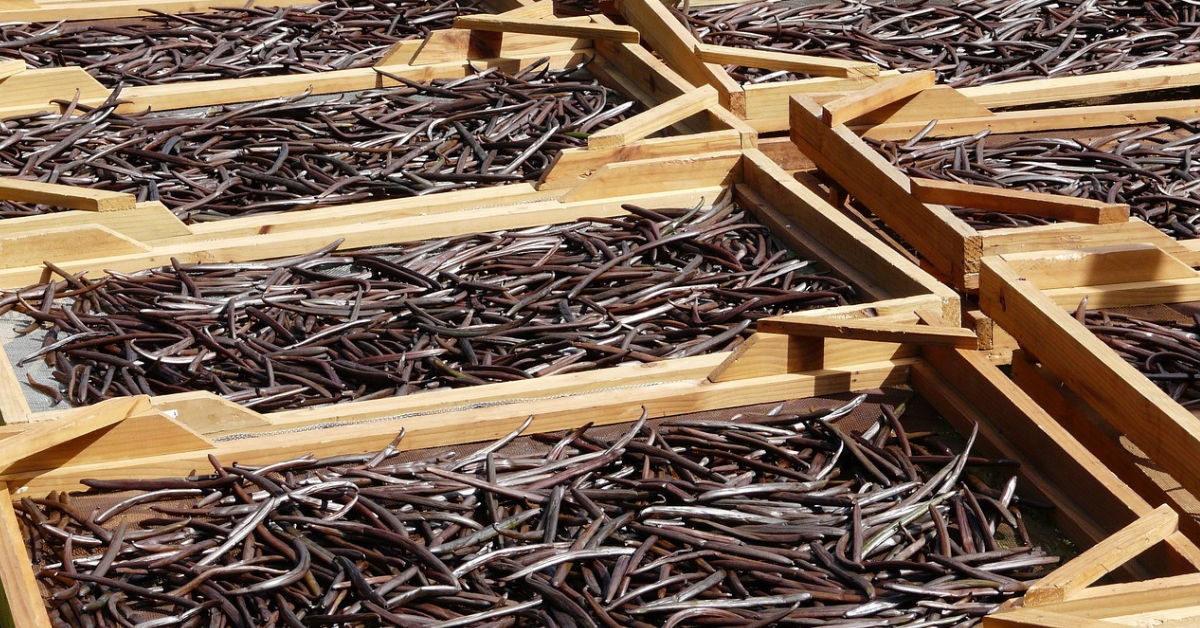
Agarbatti is more than just a fragrance in India. During pooja, it sets the mood, makes the home feel fresh after cooking, and creates a relaxing atmosphere.
Thank you for reading this post, don't forget to share!
Most people who search for agarbatti perfume want to find one of these:
- The fragrance used in Agarbatti (the perfume blend added to incense sticks)
- How to choose the right agarbatti scent for home, pooja, gifting, or meditation?
- Whether perfumed ginger is safe, strong, long-lasting, or natural
This guide explains it in a practical, India-first way so you can pick a fragrance you will enjoy.
What is Agarbatti perfume?
There is a fragrance blend called agarbatti perfume that is used to scent incense sticks. These products can be used to make perfume, depending on their composition:
- Extracts of natural origin (such as essential oils).
- Oil-based Indian perfumery known as attar (ittar)
- Perfumery uses aromatic compounds
- Contains natural and aromatic ingredients for high performance and low cost
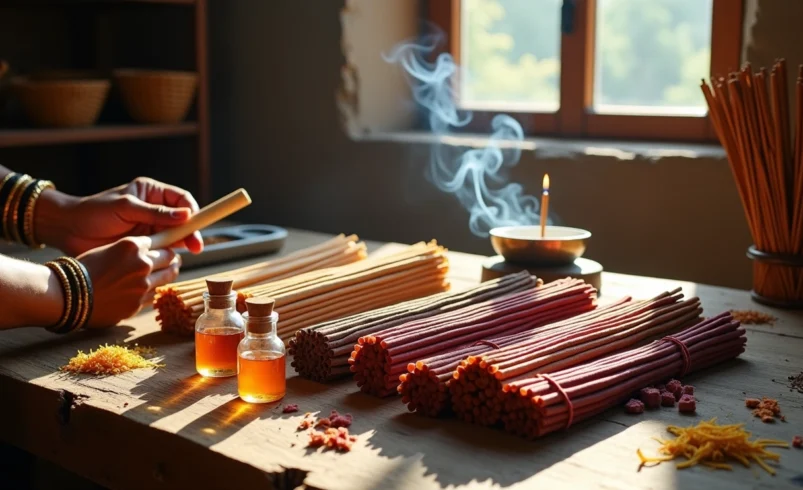
In incense manufacturing, perfume is typically added by:
1. Mixing fragrance into the incense paste (common in “masala” agarbatti)
2. Dipping or soaking prepared sticks in fragrance oil (common in “dipped” incense)
Why some Agarbatti fragrances feel premium and others feel harsh?
Two incense sticks can both say “Sandalwood” but smell completely different because of:
1) Fragrance quality and blends
When a perfume is blended successfully, the opening (the first one to two minutes) and the dry-down (the lasting smell) are smoother and softer. There can be a sharp, smoky, or overly sweet flavor in an unbalanced blend.
2) Smoke and scent balance
An incense stick is a mixture of fragrance and combustion. Having rough base materials can make even a good perfume smell burnt.
3) Fixatives and longevity
It is usually necessary for the scent of the agarbatti perfume to hold throughout the burning process for it to be long-lasting. The results of traditional resins and perfumery fixatives will vary based on the brand and formula used.
Popular agarbatti perfume notes Indians love, and what they are good for
Here are crowd-pleasing categories that work well in Indian homes:
Floral (soft, familiar, comforting)
- Jasmine and Mogra
- The Rose
- Lavender (more spa-like than traditional)
- Suitable for: evenings, daily home fragrances, gifts
- A forest (temple-like, grounding)
- The sandalwood tree
- Blends with cedar, woody notes
- The best for: Pooja, meditation, and calming routines
Resins and Pooja classics (rich, devotional vibe)
- Loban
- Frankincense-style blends
- Champa-style blends
Best for: prayer rooms, festivals, traditional households
Fresh and clean (modern, less heavy).
- The citrus fruit
- AQUATIC “COOL” BLENDS
- A good choice for: small rooms, daytime use, people who are sensitive to strong scents
Sweet and warm (festive, dark throws)
- Vanilla
- Amber
- Oudh-style blends
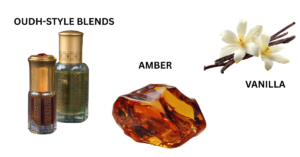
Best for: winters, large spaces, special occasions
How to choose the right Agarbatti perfume for your home
Use this quick checklist to avoid buying scents that smell too strong or too sharp.
If you want it for your pooja,
Choose: sandalwood, loban, resinous blends, mild florals
Do not wear: very fruity, candy-sweet, sharp deodorant-like scents (if you do not like perfumey scents)
If you want it for a daily or home fragrance
Choose: mogra, rose, lavender, fresh blends
Tip: Choose medium intensity if your space is small.
If you want it for guests and compliments
A champa-style blend, a sandalwood and floral blend, or a mild oud-style blend are available
The smell of these is usually premium when they are balanced well.
If you get headaches easily
The fragrance should be lighter, preferably floral or woody, and it should be burned for a shorter period of time with ventilation. You should also consider low-smoke options if they are available.
Note: On Jordan writes you can find all the details about perfumes and materials
Natural agarbatti perfume vs perfumed agarbatti, what is the difference?
Indian markets have confusing labels.
Natural often means the more reliance on plant-based materials (like essential oils or resins), but it does not automatically mean better or safer.
Perfumed usually means a formulated fragrance blend designed for consistency and projection.
A more useful way to judge is:
- Does it smell balanced or chemical-sharp?
- Does the room smell pleasant after the stick finishes?
- Does it cause irritation for anyone at home?
A practical safety note for Indian homes
In small, unventilated rooms, burning incense can create smoke and fine particles, which can affect the air quality. Particulate matter and indoor air pollution can affect respiratory health, according to multiple public health sources. Agarbatti should be ventilated daily if you burn them every day.
World Health Organization guidance on household air pollution and particulate matter health impacts, as well as research literature on incense smoke and indoor pollutants.
https://www.who.int/news-room/fact-sheets/detail/household-air-pollution-and-health
https://www.who.int/news-room/fact-sheets/detail/ambient-(outdoor)-air-quality-and-health
https://pmc.ncbi.nlm.nih.gov/
Simple ways to enjoy Agarbatti more comfortably:
– Burn near a window or an exhaust, not in a closed room
– Use a proper stand and avoid curtains
– Burn half a stick if the perfume is strong
– If someone has asthma or allergies, consider lower-smoking alternatives
What makes an Agarbatti perfume smell long-lasting?
If you want the fragrance to stay in the room after burning, look for:
Dense notes: sandalwood, amber, resinous blends usually linger
Better base materials: a smoothermaterials: a smoother burn often equals cleaner fragrance
Right intensity for your room: too strong can feel suffocating, too light disappears
Pro tip: In small bedrooms, super-strong garbatti often feel heavy. Medium intensity usually feels more premium.
Agarbatti perfume for business and gifting trends in India:
If you are picking scents to sell or gift in India, these combinations usually work:
– Sandalwood plus rose (traditional, broad appeal).
– Mogra plus mild musk (fresh, clean-home vibe)
– Champa plus woody base (temple-like, festive)
– Lavender plus soft woods (modern, urban preference)
For gifting, packaging matters, but first-light matters too. A scent that starts smoother wins.
FAQs about agarbatti perfume
Is Agarbatti perfume the same as body perfume?
Not at all. The purpose of body perfume is to soothe the skin and protect the fabric. There is a big difference between the smell of agarbatti perfume when it is burning and the smell of the perfume when it is not burning.
Why does the same fragrance smell different across brands?
The term “rose” or “sandalwood” refers to a category, not to a single substance. Blends, base materials, and burning quality all affect the final scent.
Which Agarbatti perfume is suitable for daily use?
The most common Indian home fragrances are mogra, sandalwood, mild rose, and fresh blends. There is usually a pleasant taste without being too heavy.
How do I test an Agarbatti fragrance without wasting money?
Buy the smallest pack, burn one stick near ventilation, and judge:
1) the first 2 minutes
2) the middle
3) the lingering room smell after it finishes
Final thoughts
Strong fragrance is not the only thing that makes an agarbatti perfume good. The feeling you get while the fire burns and after it is done is what really matters. It is almost always better to choose a scent family that matches your purpose (pooja, daily freshness, meditation, guests).