The best agarbatti smell transports us to a realm of tranquility that ordinary incense simply can’t match. Have you ever wondered what secret ingredients and techniques create that rich, lingering fragrance that elevates your space?
Thank you for reading this post, don't forget to share!
India’s ancient tradition of agarbatti making spans over 60 years for some premium manufacturers, with these fragrant sticks commonly used for spiritual, religious, and therapeutic purposes. Working with top agarbatti perfume suppliers has shown us that quality incense not only purifies your surroundings but also enhances focus, reduces stress, and promotes overall well-being. When we choose premium brands, we’re investing in natural ingredients that are safer for both our health and the environment.
Throughout this guide, we’ll uncover the hidden techniques behind exceptional incense, explore what separates premium products from mass-produced options, and reveal industry secrets that manufacturers rarely discuss. Whether you use agarbatti for meditation, daily ambiance, or spiritual practice, understanding these insights will transform how you select and appreciate these aromatic treasures.
What Makes an Agarbatti Smell Truly Premium?
The difference between ordinary and premium agarbatti lies in the intricate details of ingredients and craftsmanship. Premium agarbatti carries complex layers of fragrance that unfold gradually rather than overwhelming your senses immediately.
Natural vs Synthetic Ingredients
Premium agarbatti fragrance begins with the choice between natural and synthetic ingredients. Natural incense contains herbs, flowers, resins, essential oils, and wood powders without artificial additives. In contrast, synthetic varieties rely on petrochemical-based fragrance oils, chemical binders, and artificial colorants designed to mimic natural scents at lower costs.
Natural ingredients create a subtle, earthy, and authentic aroma profile that feels closer to nature. These biodegradable components are often harvested from renewable resources, making them environmentally friendly. Furthermore, they produce cleaner smoke that’s less likely to trigger allergies or respiratory issues in sensitive individuals.
Synthetic agarbattis typically emit stronger, more immediate scents that can sometimes feel artificial or overwhelming. While they offer consistency and affordability, they may release unwanted residues when burned, particularly in enclosed spaces. For those seeking the best agarbatti smell, understanding this fundamental difference becomes essential for making informed choices.
Role of Essential Oils and Resins
Essential oils form the aromatic soul of premium agarbatti. Sandalwood oil provides deep, woody sweetness with grounding effects ideal for meditation. Rose oil adds romantic, calming floral notes while jasmine creates an intoxicating sweetness with uplifting qualities. Additionally, lavender contributes relaxing properties, and lemongrass brings refreshing, citrusy elements.
Natural resins serve as fixatives that enhance both fragrance complexity and burn quality. Frankincense, with its rich balsamic and slightly spicy aroma, creates a spiritual atmosphere. Myrrh adds depth with its earthy sweetness, while benzoin resin contributes warmth and sweetness that extends burn time. Notably, halmaddi resin, collected from Ailanthus trees in India, provides the distinctive creamy texture found in premium Indian incense.
According to reputable agarbatti perfume suppliers, this combination of premium oils and resins is what separates ordinary incense from exceptional varieties. The layered complexity doesn’t just smell better—it creates an entirely different sensory experience that evolves throughout the burning process.
Impact of Hand-Rolling on Fragrance
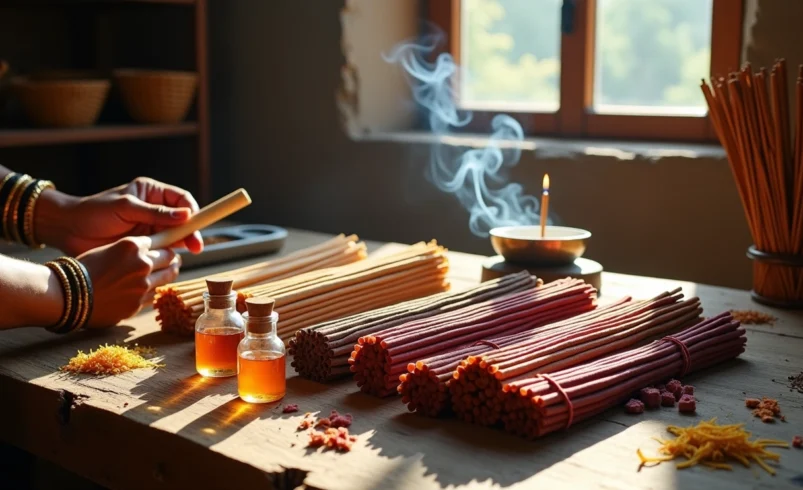
The manufacturing process significantly influences fragrance quality. Hand-rolled agarbatti, crafted by skilled artisans using traditional techniques, typically incorporates a carefully balanced mix of natural powders, aromatic oils, and binding agents. This meticulous process allows for better integration of ingredients and more controlled drying.
Machine-made varieties often contain chemical binders and synthetic perfumes that facilitate mass production but compromise quality. Consequently, the fragrance profile differs dramatically. Hand-rolled incense produces deeper, more layered aromas that release gradually and maintain their pleasant character throughout the burn.
Traditional masala incense production exemplifies this difference. Instead of simply dipping blank sticks in synthetic fragrance oils, natural ingredients are carefully pasted onto bamboo sticks. This method ensures that each stick carries a harmonious blend of herbs, resins, and essential oils that work together to create a premium olfactory experience.
The difference becomes apparent in both fragrance quality and burning characteristics. Hand-rolled agarbatti burns more evenly, allowing the complex aroma to unfold naturally rather than dissipating quickly or becoming overwhelming. This traditional craftsmanship results in incense that reflects centuries of perfumery knowledge—a crucial factor in creating the best agarbatti smell possible.
5 Secrets Behind the Best Agarbatti Smells
Beyond premium ingredients lies a world of specialized techniques that distinguish truly exceptional agarbatti. Premium manufacturers guard these secrets closely, as they represent generations of craftsmanship and innovation.
1. Ingredient Sourcing from Specific Regions
Top agarbatti makers meticulously source raw materials from specific geographic locations known for superior quality. Agarwood, a cornerstone ingredient in premium incense, comes primarily from Vietnam, Cambodia, Indonesia, Myanmar, and Laos. The interaction with bacteria in these regions produces a distinctive aromatic resin that develops richer character as the tree ages. Likewise, sandalwood sourced from India offers soft, sweet woody notes that linger remarkably longer than varieties from other regions.
Indian manufacturers increasingly source bamboo domestically from northeastern states like Assam and Tripura, moving away from imports from Vietnam and China. This shift followed the reclassification of bamboo from “tree” to “grass,” encouraging local production and creating unique regional characteristics in the final product.
Joss powder, derived from Litsea glutinosa bark, serves as the critical binding agent that adheres other ingredients to the bamboo stick. Its harvesting location significantly impacts the final fragrance profile, with manufacturers often keeping their precise sourcing locations confidential to maintain competitive advantage.
2. Aging of Raw Materials for Aroma Depth
Much like fine wine, certain raw materials in premium agarbatti actually improve with age. Agarwood powder, especially prized in East Asian incense traditions, develops deeper, more rounded scent profiles when properly aged. The resins within mature, creating more complex aromatic compounds that enrich the burning experience.
Older agarwood powder commands higher prices precisely because of this enhanced scent complexity. Through the aging process, volatile compounds stabilize and integrate, resulting in more harmonious fragrance release during burning. This maturation process cannot be rushed or artificially replicated, making properly aged ingredients a closely guarded resource among top manufacturers.
Base materials in exceptional incense typically include resinous woods aged five years or longer, ensuring optimal aroma development. These aged materials become the foundation upon which the incense’s character is built, providing depth that newly harvested materials simply cannot match.
3. Use of Bamboo-less Sticks for Clean Burn
A revolutionary innovation in premium agarbatti production is the elimination of bamboo cores. Traditional incense sticks use bamboo as their structural foundation, yet this produces additional smoke and a woody undertone that can interfere with the primary fragrance.
Bamboo-less agarbatti consists entirely of aromatic compounds, resins, and natural binders, eliminating the burnt wood smell entirely. This results in a cleaner, more consistent burn with significantly reduced smoke output. Moreover, the absence of bamboo allows the fragrance to remain pure and undiluted, creating a more refined sensory experience.
These bamboo-free alternatives burn more slowly and evenly, extending usage time while providing better fragrance release throughout the burning process. For individuals with respiratory sensitivities, the reduction in smoke makes these premium options particularly valuable, as they cause less irritation while delivering enhanced aromatherapeutic benefits.
4. Proprietary Blending Techniques
Premium agarbatti manufacturers develop signature formulations through carefully calibrated ingredient ratios. A typical high-quality blend might contain 60-70% primary wood powder (such as agarwood), 15-20% plant-based binder, and 10-15% aromatic enhancers. These precise ratios represent decades of experimentation to achieve optimal burn characteristics and fragrance profiles.
The particle size of ground materials critically impacts quality, with the finest incense requiring ingredients ground to pass through an 80-mesh screen sieve (0.18mm) at minimum. This ultrafine consistency ensures even distribution of aromatic compounds and consistent burning. Many manufacturers freeze resins before grinding to achieve the perfect texture without compromising volatile compounds.
Hydration techniques play an equally important role, with incremental addition of precisely tempered water (around 40°C) to achieve what artisans describe as a “cohesive yet friable” texture. This meticulous blending process prevents aromatic degradation while preparing the mixture for application.
5. Controlled Drying for Fragrance Retention
Perhaps the most overlooked yet crucial step in creating the best agarbatti smell comes during the drying process. Premium manufacturers employ temperature and humidity-controlled environments that evenly dehydrate incense while preserving fragrance integrity.
The drying temperature remains carefully regulated to prevent essential oils and aromatic compounds from evaporating prematurely. This controlled approach ensures the final product retains maximum fragrance potency, unlike mass-produced varieties dried rapidly at high temperatures that sacrifice aroma quality for production efficiency.
After scenting with perfume oils (typically mixed with DEP oil in a 1:4 ratio), premium sticks undergo a separate drying phase lasting 2-3 days in shaded conditions. This extended period allows fragrances to fully integrate while maintaining ideal moisture content of 8-10% in the finished product. The result is incense that not only produces exquisite aromas during burning but continues to perfume spaces even after the stick is fully consumed.
How Top Agarbatti Brands Maintain Consistency
Consistency remains the hallmark of respected agarbatti brands, with elaborate systems ensuring each stick performs identically. This reliability doesn’t happen by accident—it results from rigorous processes refined over decades.
Fragrance Testing and Quality Control
Maintaining the best agarbatti smell requires adherence to strict quality standards. Premium manufacturers follow the Bureau of Indian Standards (BIS) code IS: 13582, which continuously monitors products for compliance. Each batch undergoes meticulous examination for burning time, smoke emission, ash residue, fragrance quality, and diameter uniformity.
Quality control checks identify and eliminate any sticks failing to meet set standards for aroma and burning properties. This assessment involves a specialized panel of three individuals with keen olfactory senses who must unanimously agree on the pleasant and consistent fragrance throughout the burning process.
Testing laboratories employ modern instrumentation aligned with national standards, ensuring reliable and reproducible results that validate product quality. Sophisticated analytical equipment operated by certified experts examines samples against IS 15495:2020 requirements, verifying that sticks emit pleasant aroma continuously while burning without producing irritating smoke or eye discomfort.
Batch-wise Scent Calibration
The extrusion process in modern manufacturing ensures consistent diameter, density, and length in each incense strand. This standardization creates the foundation for precise scent calibration across batches.
High-quality brands maintain a typical composition ratio of approximately 21% herbal and wood powder, 35% fragrance material, 11% adhesive powder, and 33% bamboo stick by weight. They meticulously control initial moisture content during molding, providing ideal conditions for subsequent precise drying.
Sophisticated drying rooms with controlled temperature and humidity subsequently dehydrate incense evenly, preventing surface cracking while preserving fragrance compounds that might otherwise evaporate at excessive temperatures. This controlled environment adapts to various climates—whether southern humidity or northern dryness—maintaining consistent quality regardless of manufacturing location.
Use of In-house Perfumers
Leading agarbatti perfume suppliers emphasize building long-term relationships with manufacturers, ensuring timely delivery of quality raw materials. The finest brands maintain dedicated in-house perfumery teams who develop signature scent profiles.
These specialists oversee standardization of production processes, conducting regular quality checks through olfactory assessment sessions. To prevent sensory fatigue during evaluation, they limit the number of samples assessed per session, examining potentially fatiguing samples last.
The coordination between manufacturing machinery and drying techniques not only improves output by over 30% but simultaneously enhances burning performance and fragrance purity. Nevertheless, human expertise remains irreplaceable—the olfactory assessment by trained perfumers ultimately determines whether each batch achieves the brand’s signature aroma profile.
Traditional vs Modern Manufacturing: What You’re Not Told
Manufacturing methods have evolved dramatically in the incense industry, yet many consumers remain unaware of how production techniques directly impact the final product’s sensory experience.
Handcrafted vs Machine-Made: Scent Differences
Hand-rolled agarbatti retains subtle aromatic nuances that mechanical production often loses. Traditional artisans work with smaller batches, allowing for precise ingredient adjustments and longer masala setting times. In essence, these manual techniques preserve volatile compounds that create complex scent profiles. Machine manufacturing, although efficient, typically uses higher temperatures that can diminish delicate fragrance notes, resulting in more linear scent profiles that lack depth.
Smoke Output and Health Considerations
The best agarbatti smell shouldn’t come with excessive smoke. Traditional methods typically produce lower smoke output as they contain fewer chemical accelerants. Primarily, this difference stems from ingredient quality—artisanal producers favor natural resins over synthetic binders. Modern mass production often incorporates chemical additives that increase smoke production and potentially release irritants when burned. Nonetheless, some contemporary manufacturers now employ advanced techniques that significantly reduce smoke while maintaining fragrance quality.
Why Some Brands Still Use Charcoal
Initially common in incense production, charcoal continues to appear in certain premium varieties despite newer alternatives. Premium manufacturers value charcoal for its consistent burn properties and ability to project fragrance uniformly throughout a space. Leading agarbatti perfume suppliers acknowledge that charcoal-based formulations, although more expensive to produce, create distinctive heat diffusion patterns that enhance certain aromatic compounds. This traditional ingredient remains valuable for ceremonial incense where specific burn characteristics are required.
Choosing the Right Agarbatti for Your Space
Selecting fragrances that match your specific needs transforms an ordinary incense experience into something truly memorable. Understanding how to pair the best agarbatti smell with different spaces makes all the difference.
Fragrance Types for Meditation vs Daily Use
For meditation and spiritual practices, woody and resinous scents create ideal focus environments. Sandalwood, frankincense, and camphor are perfect for prayer rituals, creating an atmosphere of reverence and purification. Conversely, lavender and champa support mental clarity during meditation by reducing distractions and deepening focus.
Daily home use calls for vibrant, refreshing scents. Rose, jasmine, and other florals brighten living spaces and lift spirits. For workspaces, subtle aromas like musk or lavender reduce stress without overwhelming colleagues.
How to Read Labels and Ingredient Lists
Look beyond attractive packaging when selecting quality incense. Natural products typically list essential oils, resins, and plant-based ingredients first. Avoid products with undefined “fragrance” listings, as these often indicate synthetic compounds.
Phrases like “charcoal-free” suggest cleaner burning properties, while “hand-rolled” typically indicates traditional crafting methods. Manufacturers using premium ingredients generally highlight their sourcing practices.
Tips from Agarbatti Perfume Suppliers
First, consider your space size—smaller rooms require milder fragrances to prevent overwhelming scents. Agarbatti perfume suppliers recommend testing how scents interact with your specific environment, as humidity and ventilation affect fragrance dispersal.
Precisely match fragrance with intention—citrus aromas help reduce stress and anxiety, while floral scents improve mood and diminish anxiousness. Spicy fragrances create warm, sensual atmospheres, making them perfect for evening relaxation.
Conclusion
Throughout our exploration of premium agarbatti, we’ve uncovered what truly separates exceptional incense from ordinary varieties. The best agarbatti smell doesn’t happen by accident—it results from carefully sourced natural ingredients, traditional craftsmanship, and time-honored techniques that many manufacturers keep hidden from consumers.
After examining the differences between natural and synthetic ingredients, we can confidently say that premium agarbatti delivers complex, layered fragrances that unfold gradually rather than overwhelming your senses immediately. Essential oils and natural resins serve as the aromatic soul of quality incense, creating an entirely different sensory experience that evolves throughout the burning process.
Hand-rolling techniques undoubtedly produce deeper aromas that release gradually and maintain their pleasant character until the final ember. This stands in stark contrast to machine-made varieties that might smell strong initially but lack the nuanced complexity that makes premium incense so special.
The five secrets we’ve revealed—regional ingredient sourcing, aging raw materials, bamboo-less sticks, proprietary blending techniques, and controlled drying—explain why some agarbatti transcends ordinary fragrance to create truly transformative experiences. These practices represent generations of craftsmanship that simply cannot be rushed or mass-produced.
Additionally, the rigorous quality control measures employed by top manufacturers ensure that every stick delivers consistent performance and fragrance. Their dedication to perfection involves specialized testing panels, precise batch calibration, and in-house perfumers who maintain signature scent profiles.
Ultimately, choosing the right agarbatti for your space depends on your specific needs and intentions. Whether you seek fragrances for meditation, daily ambiance, or spiritual practices, understanding the differences between traditional and modern manufacturing helps you make informed choices about what you bring into your home.
The next time you light an agarbatti, you’ll certainly appreciate the ancient wisdom, careful craftsmanship, and quality ingredients that create that moment of aromatic bliss. This knowledge transforms not just how we select incense but also how deeply we can appreciate this ancient art form that continues to enhance our well-being today.
Key Takeaways
Discover the hidden secrets behind premium agarbatti that create truly exceptional fragrances and transform your aromatic experience.
• Natural ingredients create superior scents: Premium agarbatti uses essential oils, resins, and plant-based materials instead of synthetic chemicals, producing cleaner burns and more authentic, layered fragrances.
• Regional sourcing and aging matter: Top manufacturers source agarwood from specific regions like Vietnam and Cambodia, then age raw materials for years to develop deeper, more complex aromatic profiles.
• Hand-rolling produces better fragrance: Traditional hand-crafted agarbatti delivers gradual, nuanced aroma release compared to machine-made varieties that often overwhelm with immediate but shallow scents.
• Bamboo-free sticks burn cleaner: Premium brands eliminate bamboo cores to reduce smoke output and prevent woody undertones from interfering with pure fragrance profiles.
• Quality control ensures consistency: Leading manufacturers use specialized testing panels, controlled drying environments, and in-house perfumers to maintain signature scent profiles across every batch.
Understanding these manufacturing secrets empowers you to select agarbatti that truly enhances your space, whether for meditation, daily ambiance, or spiritual practices. The difference between ordinary and exceptional incense lies in these carefully guarded techniques that transform simple ingredients into aromatic masterpieces.
FAQs
Q1. What makes premium agarbatti smell better than regular incense? Premium agarbatti uses natural ingredients like essential oils and resins, which create complex, layered fragrances that unfold gradually. Hand-rolling techniques and controlled drying processes also help preserve delicate aromatic compounds, resulting in a richer sensory experience.
Q2. How can I choose the best agarbatti for my needs? Consider your intended use (meditation, daily ambiance, or spiritual practices) and personal scent preferences. Look for brands that list natural ingredients, have longer burn times, and produce less smoke. It’s also helpful to start with small packs to test fragrances before buying in bulk.
Q3. Are there health benefits to using high-quality agarbatti? Yes, premium agarbatti often contains natural ingredients that can provide aromatherapeutic benefits. Certain scents like lavender can promote relaxation, while others like sandalwood may enhance focus during meditation. Additionally, high-quality incense typically produces less smoke, reducing potential respiratory irritation.
Q4. How do manufacturers ensure consistency in agarbatti fragrance? Top manufacturers employ rigorous quality control measures, including specialized testing panels, batch-wise scent calibration, and in-house perfumers. They also use controlled drying environments and standardized production processes to maintain consistent fragrance profiles across batches.
Q5. What’s the difference between traditional and modern agarbatti manufacturing? Traditional methods often involve hand-rolling and use of natural ingredients, resulting in subtle, complex aromas. Modern manufacturing can be more efficient but may use synthetic additives and higher temperatures, potentially compromising delicate fragrance notes. However, some contemporary manufacturers now combine traditional techniques with advanced technology to produce high-quality incense at scale.