For thousands of years, gum olibanum, formerly known as Frankincense, was burned in temples, used for medicine, and distilled into perfumes. As a result of the booming essential oil industry, natural perfumery, and holistic wellness industries, demand is skyrocketing in the United States and UK.
Thank you for reading this post, don't forget to share!
Check out our Ambrofix guide
However, not all gum olibanum is created equal. The species of the tree, the climate of the region, and the harvesting methods dictate the scent, chemical profile, and market value.
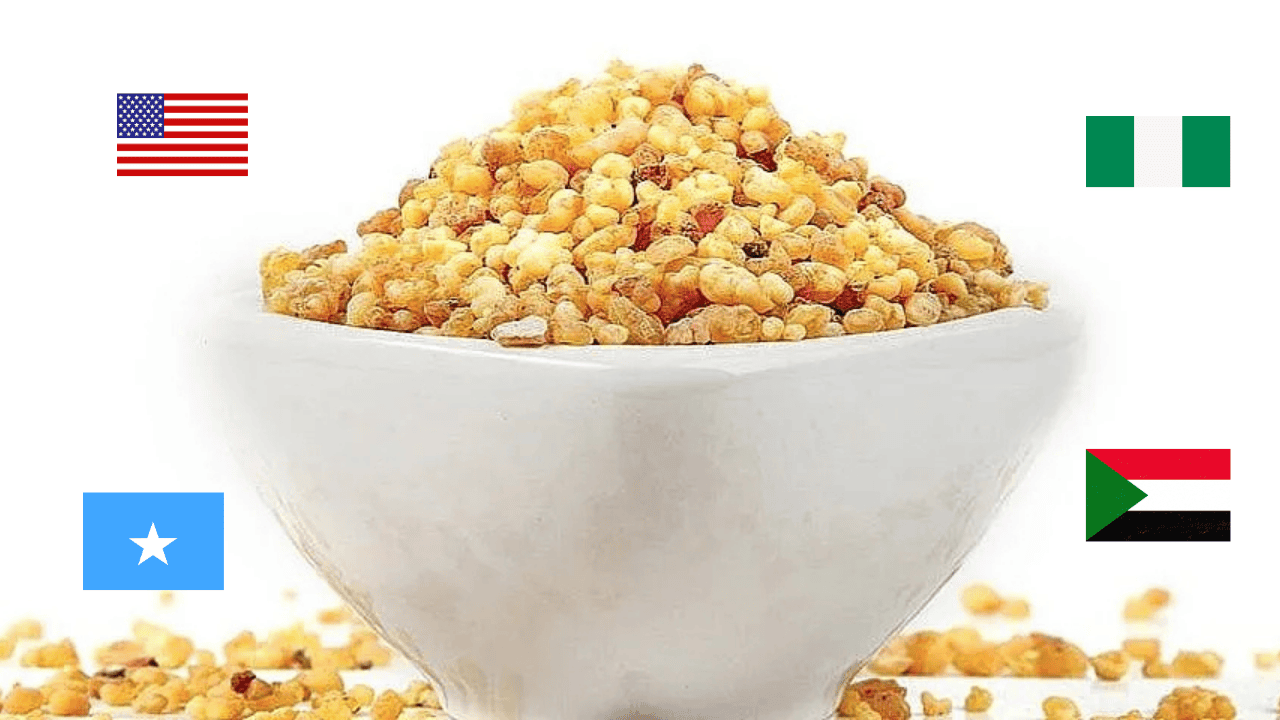
This detailed guide explores the distinct characteristics of gum olibanum sourced from Ethiopia, Nigeria, Somalia, and Sudan. It analyzes the current market landscape in the USA.
1. Gum Olibanum Ethiopia: The Scent of History
Ethiopia is one of the world’s largest producers of frankincense, commonly referred to in the global market as Gum Olibanum Ethiopia. The resin here is deeply tied to the Ethiopian Orthodox Church and the country’s agricultural heritage.
Primary species: Boswellia papyrifera
Primary regions: Tigray, Amhara, and Gondar.
Characteristics and profile:
-
Ethiopian Gum Olibanum is renowned for its high oil content, making it a favorite for distillation.
-
Scent profile: It possesses a sweet, lemon-pine aroma with a deep balsamic undertone. It is considered the “classic” church incense smell.
-
Appearance: Resin tears (drops) are often yellow to semi-translucent, turning white/dusty as they age.
Market insight for USA/UK buyers:
-
Sustainability: Boswellia papyrifera is currently under threat due to over-harvesting and cattle grazing. Buyers in the UK and USA are increasingly demanding Sustainable or Fair Trade certifications when sourcing from Ethiopia to ensure the species’ longevity.
-
Uses: It is the primary choice for Roman Catholic and Orthodox incense blends. In the USA, it is heavily used for essential oil distillation due to its high octyl acetate yield.
2. Gum Olibanum Somalia: The Gold Standard
Somalia is arguably the most famous source of high-grade frankincense, known globally as Gum Olibanum Somalia. For London perfume houses and USA essential oil giants, this Somali resin is often the benchmark of quality.
Primary species: Boswellia carterii The King and Boswellia frereana The Queen/Maydi.
Primary regions: Puntland (Sanaag and Bari regions).
Characteristics and profile:
Market insights for USA/UK buyers:
-
Wild harvested: Almost all Somali gum is wild-harvested.
-
Supply chain: The supply chain can be volatile due to local logistics, but major US importers have established direct-trade cooperatives to ensure stability.
-
Top tier: If you are formulating a luxury perfume in the UK or a high-end therapeutic oil in the USA, Boswellia frereana or Grade A Carterii is your target.
3. Gum Olibanum Sudan: Volume Producer
Sudan shares a border and botanical landscape with Ethiopia. The massive production of Gum Olibanum Sudan makes the country one of the world’s largest exporters by volume.
Primary species: Boswellia papyrifera
Primary regions: Blue Nile, Kordofan, and Darfur.
Characteristics and profile:
-
Sudanese gum olibanum is chemically very similar to the Ethiopian variety, as they share the same tree species.
-
Scent profile: Fresh, lemon-citrus, and balsamic.
-
Texture: Often available in larger “chunks” or bulk siftings than carefully sorted Somali grades.
Market insights for USA/UK buyers:
-
Cost-effectiveness: Sudan often offers competitive pricing due to production volume, making it an excellent choice for industrial buyers in the USA who need frankincense for bulk extraction or as a fixative in commercial soaps and detergents.
-
Logistics: Import regulations can be strict regarding banking and logistics due to sanctions and internal conflicts, though trade has opened up significantly in recent years. British importers often utilize hubs in Dubai or Port Sudan to consolidate shipments.
4. Gum Olibanum Nigeria: The Rising Star
While East Africa gets the spotlight, West Africa specifically Nigeria is an emerging powerhouse in the frankincense trade.
Primary species: Boswellia dalzielii and some Boswellia carterii variants in the north.
Primary regions: Northern Nigeria States bordering Niger and Chad.
Characteristics and profile:
-
The Nigerian variety is chemically distinct and gains a cult following among aromatherapists.
-
Scent profile: It has a powerful minty, citrus, and camphoraceous top note that is sharper than East African varieties.
-
Chemical uniqueness: Studies suggest Boswellia dalzielii is exceptionally high in Incensole Acetate a compound linked to anti-anxiety and neuroprotective effects, often higher than its East African counterparts.
Market insight for USA/UK buyers:
-
Availability: It is currently more niche but rapidly growing.
-
Price point: Generally more affordable than Somali frereana, offering a high-value proposition for supplement manufacturers in the USA looking for higher bioactive content rather than just a perfume scent.
5. Gum Olibanum USA: The Market & Regulations
The USA does not produce gum leather commercially the trees do not thrive in botanical gardens. Instead, the USA is one of the world’s largest importers and processors.
Trends in the US market:
-
Essential oil boom: Companies like doTERRA and Young Living have popularized Frankincense oil, driving massive demand for Somali and Ethiopian resins.
-
Holistic health: Gum olibanum extract is increasingly found in US-manufactured joint supplements Boswellic acid for arthritis and inflammation.
-
Clean beauty: US cosmetic brands use Frankincense resin as a natural fixative and anti-aging ingredient.
Importance and quality control:
For buyers in the USA and UK, navigating the import process requires attention to detail:
-
FDA & GRAS: In the USA, Frankincense is generally recognized as safe GRAS for use as a food additive/flavoring, but strict labeling is required for dietary supplements.
-
Grading:
-
Grade 1 / Hojari / Tears: Large, clean, light-colored pieces. Best for burning or high-end retail.
-
Grade 2 / Pea Size: Smaller pieces. Best for distillation.
-
Grade 3 / Sifting & Dust: Powder and bark. Used for incense sticks or lower-grade extraction.
-
Adulteration: Because gum olibanum is valuable, suppliers sometimes mix it with cheaper resins. US buyers should rely on Gas Chromatography-Mass Spectrometry GC/MS testing to verify species and purity.
Summary Comparison Table
| Region |
Primary Species |
Key Scent Notes |
Best Use Case |
| Somalia |
B. carterii / B. frereana |
Ethereal, Woody, Spicy |
High-end Perfumery, Aromatherapy, Chewing |
| Ethiopia |
B. papyrifera |
Lemon, Pine, Sweet |
Church Incense, Essential Oil Distillation |
| Sudan |
B. papyrifera |
Citrus, Balsamic |
Bulk Extraction, Industrial Fragrance |
| Nigeria |
B. dalzielii |
Minty, Camphor, Citrus |
Medicinal Supplements, Niche Aromatherapy |
Conclusion
For buyers in the USA and UK, the choice of gum olibanum depends entirely on the end application.For example, high-end perfumery and aromatherapy applications often prioritize the ethereal, woody, and spicy notes of Boswellia carterii or B. frereana sourced from Somalia, while industrial fragrance production may favor the bulk extraction suitability of B. papyrifera from Ethiopia or Sudan.
-
If you are looking for luxury oils and complex perfumes, look no further than Somalia.
-
Choose Ethiopia or Sudan for the classic frankincense scent associated with religious use and bulk oil production.
-
Choose Nigeria for its unique medicinal profiles and emerging market value.
As the Western market becomes more educated, the demand for transparent sourcing, sustainable harvesting, and specific chemical profiles will continue to shape the global trade in this ancient material.